The one-sentence summary
If we confront the climate crisis we can save the earth as long as we act now.
Can’t be bothered to read it? Listen to the 5-minute summary in two parts.
Want to buy the book? CLICK HERE
Note: This book was written in 2020 – after the first Trump administration was in power but before the second one was voted in.
WHAT THE BOOK SAYS 
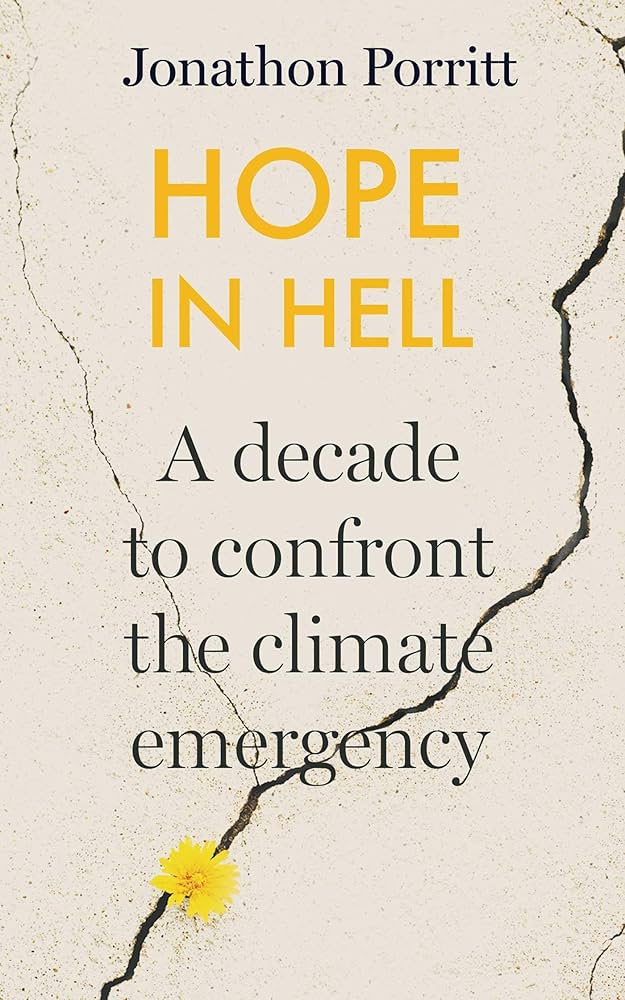
- It’s not too late, but not for long. While we are close to passing the “point of no return”, there are still compelling reasons to remain hopeful. All the solutions we need to address today’s climate emergency already exist. What’s lacking is political will, and the solution to that is also in our own hands.
- Climate change is the defining issue of our time and by far the gravest challenge humankind has ever faced – including the COVID-19 pandemic. We need an unprecedented sense of urgency, courage and shared endeavour. We still have time to do what needs to be done but only if we move now and together. New technology, innovation, the mobilization of young people and a sense of solidarity as older citizens begin to understand their own obligation to secure a safer world for younger generations.
- In the tragedy of the horizon, COVID-19 posed such an immediate and unignorable threat that it generated comprehensive and sometimes draconian interventions from governments. By contrast, the climate emergency is still seen by most people as a challenge for tomorrow.
- We need to seek solutions in 3 areas:
-
- Radical decarbonization of the economy through technology, stopping CO2 and other greenhouses getting into the atmosphere
- Radical recarbonization of the natural world through ecology, taking CO2 back out of the atmosphere
- Radical political disruption through civil disobedience
- Climate change has never been an “environmental issue.” It only got put in that box because environmental scientists and campaigners were the first to raise the alarm back in the 1980s. In fact, it is a civilization issue, going right to the heart of today’s growth-obsessed economy, challenging our very understanding of what we mean by progress.
- Buckminster Fuller said: “Nature is a totally efficient system. If we discover the laws that govern the system, and live synergistically within them, sustainability will follow and humankind will be a success.”
- With regard to the time/just in time debate there are three shades of opinion:
-
- It’s already too late. Full stop.
- It may be too late, unless…
- It’s definitely not too late.
- There certainly are things we can’t get back, including pre-Industrial levels of CO2 and massive climate-induced disruption over the next few decades, but if there were fast action this decade then we could do it.
WHAT’S GOOD ABOUT IT
- Using going on to a war footing as the analogy for what we now need to do just feels wrong. Wars in themselves fly in the face of adopting a low-carbon future.
- As Nelson Mandela said, “It always seems impossible until it’s done.” Hope is a powerful force for change. People who feel more optimistic about the future are more likely to take action to improve it. Meanwhile, shiny optimism doesn’t help, so it matters when so-called experts are selective about the data they write about because it reduces the need for urgency.
- Alexandria Ocasio-Cortez says: “Hope is not something that you have. Hope is something that you create with your actions. Hope is something you have to manifest into the world, and once one person has hope, it can be contagious.”
- One thing is clear: the idea that it might already be too late to prevent a total climate catastrophe impacts people very differently depending on their age. Young people and children are having to deal with an unimaginably cruel burden.
- So-called Green Growth contains many contradictions:
-
- Suggesting that pursuing economic growth measured by GDP represents a suitable future is the height of madness.
- Infinite growth on a finite planet is simply not possible, and it drives environmental destruction and social injustice, so we urgently need to adopt a zero-growth, stable state, economy.
- Our first priority must be to decouple economic growth from the damage it does, transform the way we create wealth, and get rid of our obsession with GDP.
- Innovation will be critical and policymakers have got to massively up their game. It’s not doable without smart regulation and incentivization. We need to get going now on everything, moving swiftly from trial to scale, while continuing to research more solutions.
WHAT YOU HAVE TO WATCH
- The author concludes, writing in 2020, that this is literally the last decade in which authentic, grounded hope can anchor everything that needs to be done. At the time of recording, it is 2026.