The one-sentence summary
A fairer world can save the planet and we need system shifts to achieve real, lasting change.
Can’t be bothered to read it? Listen to the 5-minute summary in two parts.
Want to buy the book? CLICK HERE
WHAT THE BOOK SAYS 
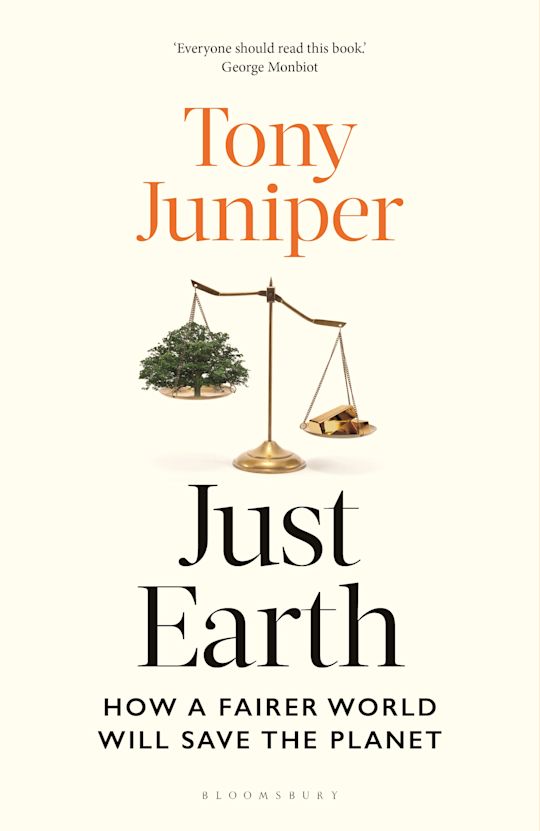
- From soil loss to wildfires, degraded rivers, mass migration and conflict, the environmental crisis is already here and is set to get much worse. While billionaires build remote bunkers and make plans for colonizing Mars, climate collapse impacts the vulnerable first and hardest. Inequality isn’t just about who suffers the consequences – it is the main obstacle blocking action.
- What is needed is fairness. We can’t fight the climate and nature crisis without addressing the ever-widening gap between rich and poor.
- A 2024 study by the Potsdam Institute showed that climate-change impacts could lead to a cut in global income of a fifth by 2050. This is six times as much as it would cost to decarbonize the economy to meet the two-degree warming limit.
- Contrary to the idea that economic growth and environmental goals are different things, it is in fact a linked system in which nature sustains the economy.
- We have a triple crisis of climate, biodiversity loss and pollution which are all interconnected. Climate change and ecosystem degradation are not actually environmental issues – they are in fact economic issues.
- A lack of connection to the natural world has been called nature-deficit disorder. There are significant human costs that come from alienation from nature, whereas the presence of it can reduce mortality and help health and recovery times. With limited environmental space, it is no surprise that our collective impact has increased as the economy has grown.
- The richest 10% are responsible for half of total lifestyle consumption emissions, and the poorest 50% only around 10%. Even the better-off people in developing countries have emissions that are below those caused by the poor in rich countries. The wealthiest 1% account for half of all aviation emissions. Only 11% of the world’s population take a flight at all, with just 4% being overseas.
- The fast fashion industry has a lot to answer for, generating poor quality clothing to allow people to keep pace with trends. Clothes manufactured in China and Bangladesh are shipped to the USA, Europe and Asia and if no one buys them they are dumped in the Atacama Desert – an area several square kilometres large that can be seen from space. The motivation behind this was first explained by Thorstein Veblen in his 1899 book The Theory of the Leisure Class which defined conspicuous consumption as the practice of buying goods primarily to show off wealth and status. The influencer industry has taken this up to another level and created what is now called the ‘buyosphere’ and the true biosphere can’t cope.
WHAT’S GOOD ABOUT IT
- Fairness, justice and equality are inextricably linked to the ecological crisis. Our priorities need to be renewable, sustainable, circular, regenerative, restorative and fair. None of the first five will work if it isn’t fair, so we need a just transition- based equality, not just new technologies and environmental policies.
- We need new measures of progress, purpose-led companies, more intelligent finance including a transition war chest, a switch in subsidies, transition plans for priority sectors, fairer incentives for sustainable consumption, the upholding of rights to a clean and healthy environment, use of the law to protect future generations, and joined up policies. All of this boils down to the need for action at all levels.
- This is the notion of thrivalism – a system that meets the needs of people thriving on a living planet rather than consuming more and more without consideration for the biosphere or how the benefits of progress are shared.
- One vox pop survey asked people their understanding of the word biodiversity and the most common answer was ‘some kind of washing powder’.
- The Gini coefficient, named after the Italian sociologist Corrado Gini in 1912, shows the degree of inequality in countries. It gradually decreased through most of the 20th century but the trend reversed in the 1980s and has been getting worse ever since. This is the opposite of progress and we have taken a step back by a century. In free markets, wealth hasn’t trickled down, it has trickled up.
- It took until 1995 for Her Majesty’s Inspectorate of Pollution to set up an initiative called Factory Watch which assessed the level of pollution from industrial complexes in the UK. The data was shocking, but led to a reduction of 48 percent of the cancer-causing emissions between 1998 and 2002.
- Media and social media do a lot of framing and the difference comes down to a distinction between ‘freedom to’ and ‘freedom from’. As well as ‘freedom to’ what about the importance of freedom from misinformation, pollution, or the consequences of climate change?
- In a world full of data, wisdom has become surprisingly scarce.
WHAT YOU HAVE TO WATCH
- Not much. This is a thorough review of all the issues and full of well-researched analysis and suggestions for action.