The one-sentence summary
The best sales people don’t just build relationships with customers – they challenge them.
Want to buy the book? CLICK HERE
WHAT THE BOOK SAYS 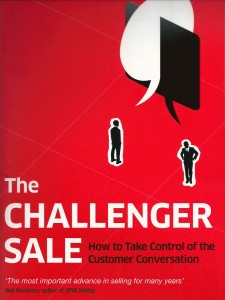
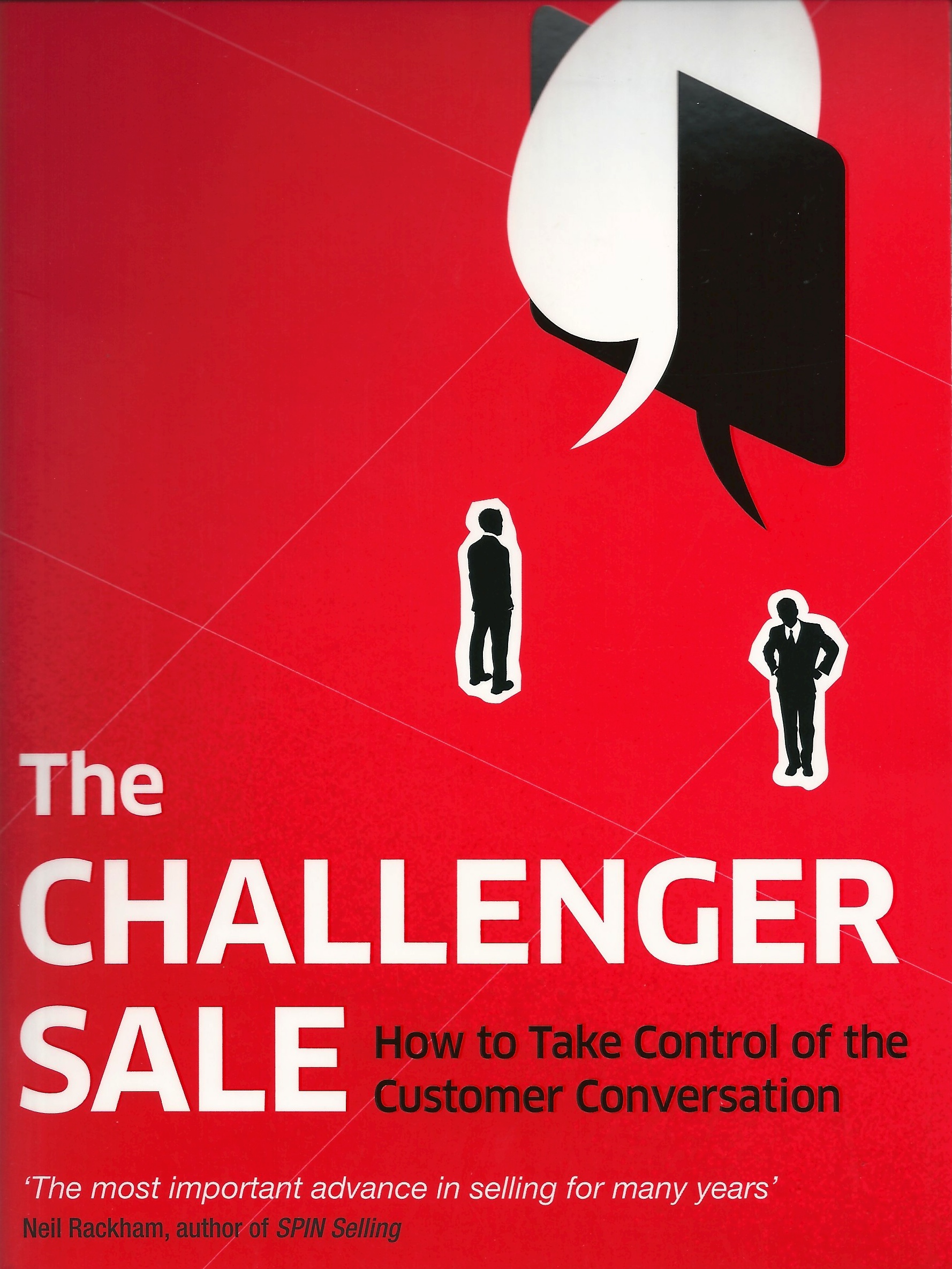
- The best sales people don’t just build relationships with customers – they challenge them.
- Every sales rep in the world falls into one of five distinct profiles, and while all can deliver average performance, only the Challenger delivers consistently high performance.
- Based on their study of 6,000 reps, the five types are the Hard Worker, the Challenger, the Relationship Builder, the Lone Wolf and the Reactive Problem Solver.
- Instead of leading with information about their company and its solutions, Challengers provide customers with surprising insights about how they can save or make money.
- They tailor their message to each customer, they are assertive (not aggressive), and push back where necessary to take control of the sale.
- Challengers provided double the number of high performers in the study, and at least half of them are more likely to succeed in a high complexity sales environment.
- They have three main skills:
- Teaching for differentiation: delivering insight that reframes the way customers think.
- Tailoring for resonance: communicating sales messages in the context of the customer.
- Taking control of the sale: openly pursuing goals in a direct but non-aggressive way to overcome increased customer risk aversion.
WHAT’S GOOD ABOUT IT
- Commercial teaching involves 6 stages:
- Warmer: build credibility through empathy.
- Reframe: shock the customer with the unknown.
- Rational drowning: intensify the problem, then break it down.
- Emotional impact: humanize the problem.
- Value proposition: introduce a new way, building confidence back up.
- Solution and implementation map: how to fix it in detail with your product.
- The KPMG SAFE-BOLD framework allows you to score from 1-10 the scale, risk, innovativeness, and difficulty of issues.
- SAFE = Small, Achievable, Following, Easy.
- BOLD= Big, Outperforming, Leading edge, Difficult.
- The sales experience contributes more customer loyalty (53%) than the brand (19%), product and service delivery (19%), and value-to-price ratio (9%) put together.
- Hypothesis-based Selling involves leading with an hypothesis of the customer’s needs, informed by experience and research.
- Having widespread support for suppliers across an organization is now vital – going straight to the decision maker no longer works.
WHAT YOU HAVE TO WATCH
- Nothing. This is based on deep research and sheds a new light on selling.