The one-sentence summary
When it comes to fire, heat and flood in the UK, we aren’t prepared for the risks we face now, let alone those to come – but we can be.
Can’t be bothered to read it? Listen to the 5-minute summary in two parts.
Want to buy the book? CLICK HERE
WHAT THE BOOK SAYS 
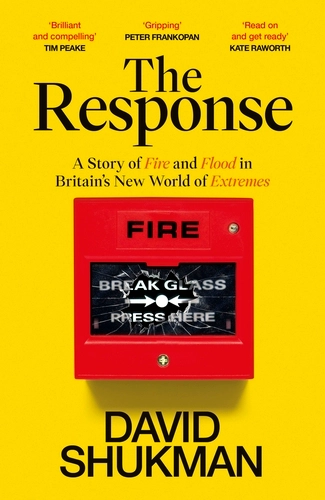
- Britain is experiencing a new world of extremes, but they are often little publicized. We are letting ourselves slide into an age where the inconceivable becomes conceivable, but there are things we can do to change things.
- The rural-urban interface, where housing backs onto marshland or woodland is a place where wildfires are common. In July 2022, there were so many that the London Fire Brigade ran out of water and fire engines for the first time since the Second World War. There were 26 major fires, whereas the daily average is 2. Assistance could not come from other parts of the country because there were 600 in total around the country.
- When it comes to experience, urban brigades ‘don’t do fields’ because they are urban. When the two things meet, they are underequipped to cope.
- In the language of fire, an ember attack is when billions of tiny sparks are carried on the wind, possibly for miles, flashover is when a great mass of flammable material suddenly ignites. While water authorities are obliged to provide a defined rate of flow to households, there is no such arrangement with the fire services.
- The National Risk Register of 2025 highlights a cascade of impacts: the risk of droughts is increasing, fires are more likely, but water scarcity undermines the ability to fight the fires. No single body is responsible for the whole picture – not DEFRA, the Cabinet Office nor the Home Office.
- Firefighters have a 30-30-30 rule. If the temperature is above 30 degrees, humidity below 30 per cent and the wind above 30 kph, there is little they can do.
- Meanwhile, the trouble with heat is that you can’t see it or hear it. It just surrounds you and works on you in ways that you can’t anticipate or control. Our core temperature needs to be 37 degrees. If it goes up to 39, trouble can start with heat exhaustion. At 40 it’s a medical emergency and at 44 you’re dead.
- It is a basic right to have access to water but because humanity is obsessed with profit, it is frequently sold to make money.
- A new climate requires new thinking, about our bodies as well as infrastructure. Many disaster scenarios involve chain reactions. Hot days encourage people to head to the coast, train tracks buckle, people and buildings are overheated, there is not enough water, the emergency services can’t cope, people get desperate, hospitals fail to stay cool, fires start, supply chains fail, and so it goes on.
- When it comes to flooding, basements are particularly vulnerable to surface-water flash flooding, when there’s far too much rainwater to drain away and the sewers overflow. River flooding kills many people, but the most dangerous form is coastal flooding because it involves the vast power of the ocean in storm surges.
- Hotter air can carry a greater weight of water, so when it comes, it comes in greater quantity.
- There is no shortage of answers to flooding – it just comes down to political choices. Too much ground is paved over. There are not enough green spaces to absorb rain and there are too many people living in inappropriate places.
- Supply chains are another big issue. An absence of tomatoes in the UK can be caused by drought in Morocco. Nearly half of the UK’s food is imported. A quarter comes from southern Europe, where weather extremes are on the rise. Conflicts in Ukraine and the Middle East don’t help, and nor does Brexit.
- While multinationals hire advisers to brief them on the risks of political upheaval or natural hazards like earthquakes, extreme weather seems to be a blind spot when it comes to supply chains. The advice should move from ‘just in time’ to ‘just in case’.
- Most of the time most of the people are mostly fine, but new extremes of weather are testing the reliability of society’s basic functions. Many suffer from the myth of protection. For example, just because barriers have kept water mainly at bay so far doesn’t mean they always will.
- When it comes to pollution, 1 million UK children are receiving treatment for asthma. Every two and a half minutes a child has an attack that could be life threatening, and yet attempts to introduce low emissions zones meet with huge resistance.
- On the economic front, many homes are now uninsurable, 6 million UK homes are at risk of flooding, and property prices in affected areas are down by 30%. These are often called climate abandonment areas.
WHAT’S GOOD ABOUT IT
- As the weather turns more violent, it forces people to think differently. While people still deny the causes of climate change, they can’t dismiss its reality quite so breezily when it strikes them more frequently and more viciously. That’s where a common understanding can be found.
- Surely the experience of enduring worsening extremes will open eyes and shift minds in ways that nothing else has, because they are not about remote corners of the world – they’re happening in your own country?
- Language to be avoided includes the words crisis, carbon footprint, greenhouse gases, 1.5 degrees and net zero because they are poorly understood by people. Climate change on its own doesn’t work, but ‘climate change is reducing crop yields and raising food prices’ cuts through. Worry is a good thing because it’s for people you care about.
- There is a market in solving these problems and providing effective responses, often called resilience solutions and sometimes backed by so-called catastrophe capitalism.
WHAT YOU HAVE TO WATCH
- This is an excellent example of investigative journalism with a conscience. Overall, one has to conclude that the response mentioned in the title is in most cases entirely inadequate for events that are very likely to happen sooner than people think. It’s a sobering thought.